

Enhancing Home Security with Automated Blinds: A Smart Solution
Have you ever walked into your home after a long day and wondered, what would happen if someone tried to enter while you were gone? You lock the doors, check the windows, and still, that nagging thought lingers in the back of your mind. In an age where home security systems and cameras are commonplace, the smallest details often make the biggest difference.
Surprisingly, one of the most effective ways to enhance home security might not be a camera or alarm at all. In actuality, it could be your window treatments. Imagine if your home could appear occupied even when you’re away, subtly signaling that someone is present and discouraging intruders before they even knock on the door. That’s the power of automated blinds.
Automated blinds are more than just a modern convenience. They’re a dynamic, customizable, and surprisingly effective layer of protection that fits seamlessly into your home’s lifestyle. By simulating occupancy through scheduled opening and closing, these smart window treatments create a sense of presence that can make potential intruders think twice.
Unlike traditional blinds that require manual adjustment, automated blinds can be programmed to operate on precise schedules or triggered remotely from your smartphone. For homeowners seeking peace of mind, enhanced safety, and the integration of technology with design, automated blinds offer a subtle but powerful solution.
In this post, we will explore how automated blinds work as a home security measure, the various ways they can simulate occupancy, their integration with other smart home devices, and practical strategies to maximize their security benefits.
How Automated Blinds Simulate Occupancy
At their core, automated blinds are designed to move at times you choose, creating patterns of activity that mimic real-life routines. This feature can be a significant deterrent for burglars, who often rely on visual cues to determine whether a home is empty. By adjusting your blinds at various times of the day, you send a signal that someone is home, even if you’re miles away.
Scheduled Opening and Closing
Automated blinds in Montgomery County, PA, and the surrounding areas allow you to create schedules based on your typical routines. For example, blinds can open in the morning as if someone is waking up and preparing for the day. Midday adjustments can simulate movement for those who might be home during the afternoon. Evening routines might include partially closed blinds that give the impression someone is settling in for the night. The beauty of automated blinds is the flexibility to make these schedules as natural or varied as you need, preventing patterns that could become predictable to observant intruders.
Randomized Patterns for Added Realism
While scheduled routines are effective, adding variability to your automated blinds’ movements can enhance security even further. Some systems allow for randomized timing, ensuring that blinds open and close at slightly different intervals each day. This irregularity mimics real human behavior and makes it more difficult for someone watching your home to detect a predictable pattern. By combining scheduled routines with randomness, your home can maintain an authentic appearance of occupancy even during extended absences.
Integration with Smart Home Systems
Modern automated blinds can be connected to broader smart home networks, including lights, security cameras, and thermostats. When integrated, these devices can work together to simulate a fully occupied home. For instance, blinds can rise at the same time lights turn on in the living room, and then close while interior lights remain on in the evening, creating realistic movement and activity throughout the home. This multi-layered approach reinforces the illusion of occupancy and makes your home less appealing to would-be intruders.
Remote Control and Instant Adjustments
Even the most sophisticated schedules cannot account for unexpected changes in your routine. That’s where remote control features become essential. Many automated blinds allow you to adjust settings from your smartphone or tablet, giving you the ability to respond to unplanned events or extend occupancy simulation while traveling. The flexibility to control your blinds remotely means your home can always appear active, even when you’re away longer than expected.
Practical Benefits Beyond Security
While security is a primary concern, automated blinds also offer several complementary benefits that improve comfort, convenience, and efficiency within your home.
- Energy Efficiency: Automated blinds can be programmed to block sunlight during the hottest parts of the day, reducing the demand on air conditioning and lowering energy bills.
- UV Protection: Protecting your furniture, flooring, and artwork from fading is another subtle advantage of automated blinds. Scheduled adjustments allow you to control the amount of sunlight entering your home at specific times.
- Convenience: No more manually adjusting multiple blinds throughout your home. Automated systems handle daily adjustments, freeing up your time for other tasks.
- Accessibility: For those with mobility challenges, automated blinds eliminate the need to reach or stretch to operate windows manually.
Additionally, they blend seamlessly into custom interior designs on The Main Line. The combination of these practical benefits with enhanced home security makes automated blinds a valuable investment for homeowners who want to optimize their living space without sacrificing safety.
Types of Automated Blinds for Security
Different types of automated blinds offer varying degrees of control and aesthetic appeal. Choosing the right style for your home depends on both design preferences and functional requirements.
| Type of Automated Blind | Security Benefits | Ideal Placement |
| Roller Shades | Smooth, quiet operation with full coverage; can obscure interior visibility | Living rooms, bedrooms, offices |
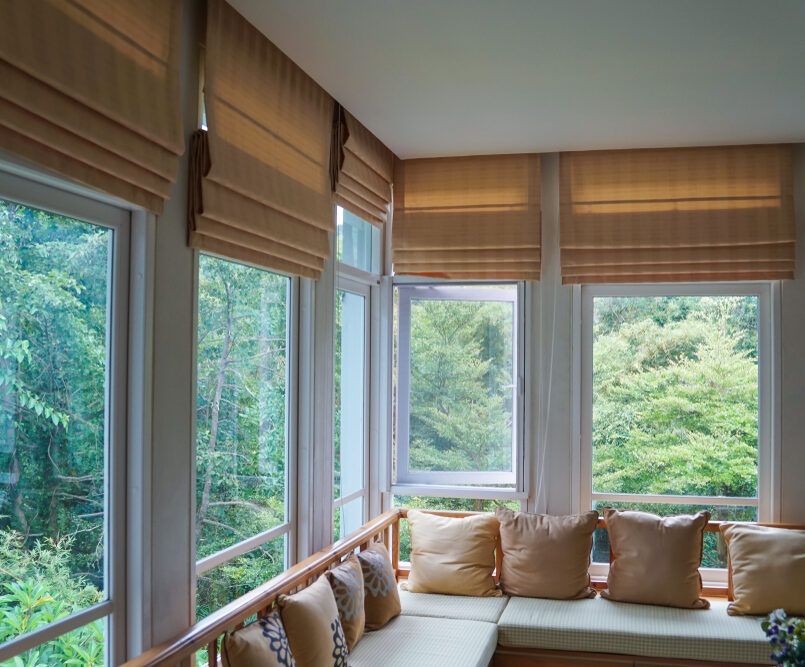
| Roman Shades | Elegant appearance with programmable lifting; provides partial to full coverage | Dining rooms, home offices, formal areas |
| Cellular Shades | Adds insulation while blocking visibility; programmable movement enhances security | Bedrooms, sunrooms, larger windows |
| Venetian Blinds | Adjustable slats allow for dynamic light control while maintaining privacy | Kitchens, living rooms, offices |
| Panel Track Blinds | Ideal for large or sliding doors; can be programmed to simulate daily activity | Sliding doors, patio areas, large windows |
By selecting blinds that complement your interior design while prioritizing coverage and automated functionality, you can ensure that your home is both secure and visually appealing.
Installing Automated Blinds for Maximum Security
The effectiveness of automated blinds in deterring intruders depends on proper installation and thoughtful planning. Here are some tips for maximizing their security impact:
- Strategic Placement: Focus on windows that are visible from the street or easily accessible. These are the areas most likely to be targeted by burglars.
- Program Realistic Routines: Ensure that your schedule mirrors typical household activity, including slight variations that mimic natural behavior.
- Combine with Lighting: Synchronize blinds with indoor lights to create an even stronger sense of occupancy. Lights turning on and off in conjunction with blinds provide a more convincing illusion.
- Layer Security Measures: While automated blinds are effective, they work best as part of a comprehensive security strategy, including locks, cameras, and motion sensors.
- Use Remote Access Wisely: Adjust blinds remotely when travel plans change or unexpected absences occur to maintain consistent occupancy simulation.
By implementing these strategies, automated blinds can become a key element in your home security plan, providing deterrence without drawing attention to the technology itself.
Real-World Scenarios
Consider a family leaving for a week-long vacation. Traditional blinds left unchanged may signal that the home is empty, inviting opportunistic burglars. With automated blinds, the family can program staggered opening and closing times throughout the day, giving the appearance that someone is actively moving around inside. In another example, a homeowner working late nights can set blinds to close at intervals, maintaining a secure and private environment while still giving the impression of activity during daylight hours.
Even for everyday use, automated blinds provide a sense of safety. Parents can program blinds to operate in rooms where children play, giving the home a lived-in feel even when the household is temporarily away. Professionals working from home can enjoy privacy while maintaining energy efficiency and a consistent, secure environment.
Addressing Common Concerns
Some homeowners hesitate to invest in automated blinds due to perceived complexity or cost. However, modern systems are designed for intuitive use, with mobile apps and voice control simplifying daily operation. Remote programming, preset schedules, and integration with existing smart home devices make automated blinds highly accessible.
Cost is another consideration, but when factoring in security, energy savings, and the convenience of automation, the investment often pays for itself over time. The addition of peace of mind and protection against potential losses makes automated blinds a practical and worthwhile addition to any home.
Choosing the Right Automated Blinds for Your Home
Selecting the best automated blinds involves balancing functionality, aesthetics, and security needs. Here are key factors to consider:
- Material: Metals, fabric blends, and composites each offer different levels of durability and opacity.
- Coverage: Full coverage options maximize privacy and security, while adjustable slats or panels offer flexibility.
- Control Options: Smartphone apps, remote controls, or integration with voice assistants increase convenience.
- Aesthetics: Blinds should complement interior design while providing effective coverage.
- Budget: Evaluate upfront cost versus long-term benefits including energy savings and enhanced security.
At The Blind Gallery, our team helps homeowners select and install automated blinds that meet these criteria, ensuring a perfect combination of style, functionality, and security.
Integrating Automated Blinds with a Comprehensive Security Plan
While automated blinds are a strong deterrent, combining them with other home security measures enhances their effectiveness. For example, pairing blinds with exterior lighting, motion sensors, and security cameras can create multiple layers of protection. Burglars are less likely to target a home that shows signs of occupancy while also having visible security features.
Automated blinds complement these measures by providing a subtle, ongoing signal of activity without alerting intruders to the presence of security systems. This integration is especially effective for vacation periods, work travel, or any time a home may be unoccupied for an extended duration.
Shining a Light on Home Security
Home security is about more than locks and alarms. It is about creating an environment that appears lived-in, cared for, and resilient. Automated blinds provide a unique combination of technology, convenience, and protection. They allow homeowners to control how their home looks to the outside world, reducing the likelihood of intrusion while enhancing comfort and efficiency.
If you’re ready to explore how automated blinds can enhance your home’s security, our team is ready to guide you. From selecting the ideal style to customizing schedules and control systems, The Blind Gallery offers a full-service approach that ensures your blinds are both functional and aesthetically pleasing. Investing in automated blinds is not just about privacy or convenience; it is a proactive step in protecting your home and family.
By adding this layer of intelligent, automated protection, you can enjoy your home with greater peace of mind knowing that your property looks active and inviting even when you’re away. Contact The Blind Gallery to get yours today!