

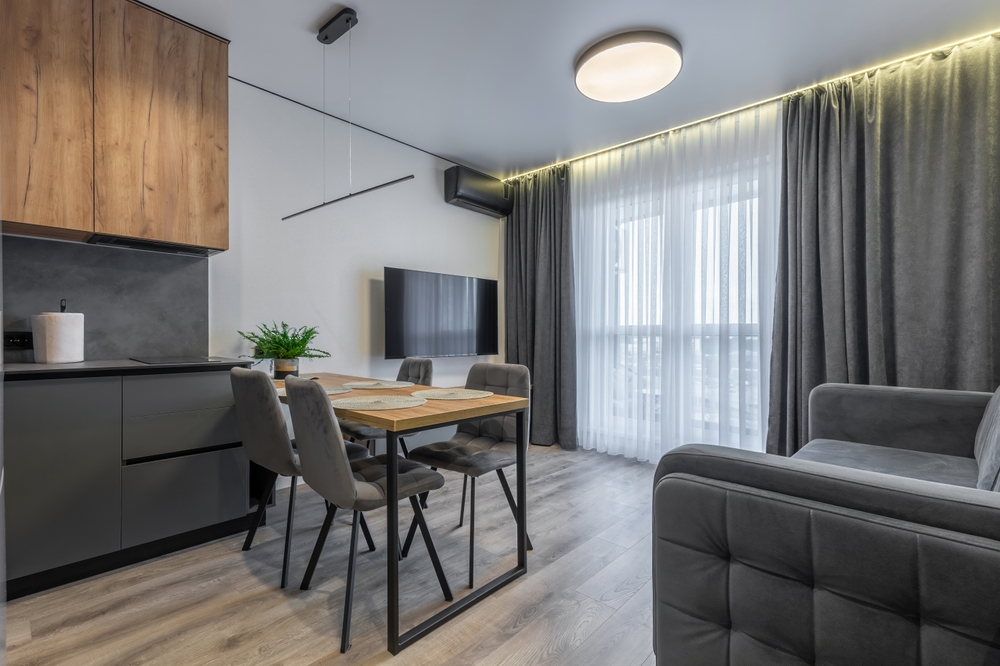
Using Soft Window Coverings for Acoustic Comfort and Sound Dampening
Bare glass reflects almost all of the sound energy that hits it, which is why a room with big uncovered windows feels loud even when nothing loud is happening. Soft solutions designed by The Blind Gallery change that by adding mass at the glass and porous surface area inside the room, cutting both the noise coming in and the echo bouncing around. The difference is measurable, and the design specialists at The Blind Gallery focus on the fabric weight, pleat depth, and mounting position that create real acoustic control.
Why Glass Makes a Room Sound Harsh
Hard, flat, non-porous surfaces reflect sound instead of absorbing it, and a picture window is one of the most reflective planes in a house. Add hardwood floors and drywall and you get a long reverberation time, where speech smears and a television has to be turned up to stay intelligible.
Two separate problems are at work. One is transmission, meaning traffic, lawn equipment and neighbors getting through the window assembly itself. The other is reverberation, meaning sound already inside the room ricocheting between glass, floor and ceiling.
Fabric at the window helps both, but not equally. Expect noticeable improvement in reverberation and a modest, real improvement in transmission, especially at mid and high frequencies where voices, dishes and tire noise live.
What Actually Absorbs Sound at a Window
Absorption is rated by Noise Reduction Coefficient (NRC), a 0 to 1 scale measured under ASTM C423 lab conditions. Bare glass sits near 0.03. A heavy, generously pleated drape specified by The Blind Gallery can reach the 0.5 to 0.6 range, meaning it soaks up roughly half the sound energy that reaches it.
Three variables drive almost all of that performance:
- Fabric weight and density: Look for 12 to 16 ounces per yard or heavier, or a mid-weight face fabric with an interlining added for mass.
- Fullness: A panel sewn at 2.5x to 3x the track width creates deep folds that trap sound in the pleats. A flat panel hung at 1.5x fullness does very little.
- Air gap: Space between fabric and glass behaves like a spring, decoupling the two surfaces and improving low-frequency behavior. Two to four inches of standoff beats a panel pressed flat against the pane.
Porosity matters too. Sound has to enter the material to lose energy as friction, so a vinyl-backed blackout liner alone reflects more than it absorbs, while a napped or brushed face fabric over that liner does the real work.
Soft Coverings Ranked for Noise
Not every soft covering performs the same way, and the quietest option for a bedroom is rarely the best looking choice for a great room. The team at The Blind Gallery evaluates styles based on sound-dampening ability:
- Interlined drapery, floor to ceiling: The top performer by a wide margin. Three layers of textile at 3x fullness, returned to the wall at the edges, reduces both echo and flanking sound around the frame.
- Cellular (honeycomb) shades: The pockets hold still air, and double-cell versions in a 3/8 inch or 9/16 inch cell add insulation value along with some acoustic benefit. A favorite for nurseries and street-facing bedrooms.
- Roman shades with interlining: Soft fabric roman shades stack in horizontal folds that scatter and absorb mid-range sound, and they read as more custom than drapery in a small room.
- Woven wood shades with a fabric liner: Bamboo, reed and jute have irregular surfaces that diffuse sound well; the liner adds the mass they lack on their own.
- Roller shades in heavy textile: A single flat layer, so the roller option helps mostly as a light and glare tool. Pair it with side panels if quiet is the goal.
- Hard treatments: Wood shutters in Philadelphia and aluminum blinds seal a window nicely but reflect sound back into the room. They can still cut transmission when closed tight, particularly shutters with a snug frame.
If you want the acoustic benefit without giving up a view, layering solves it. A light filtering shade handles daytime, and the heavy panels close at night when street noise peaks.
Mounting Choices That Double the Effect
Installation decides whether an expensive fabric performs or just hangs there. Sound leaks around edges the same way light does, so the gaps are where most of the benefit disappears. Installers at The Blind Gallery use precise mounting standards to maximize acoustic efficiency:
- Mount hardware 4 to 6 inches above the frame, or at the ceiling line in rooms with high reverberation.
- Extend the rod 6 to 10 inches past each side of the opening so the stack covers wall, not glass.
- Use return brackets that carry the fabric back to the wall, closing the gap at the sides.
- Let drapery break at the floor or puddle slightly instead of stopping an inch short.
- Specify inside-mount shades with the tightest reveal your installer can hold, typically 1/4 inch or less per side.
A ceiling-mounted track in a living room with a two-story window wall does more for acoustics than any upgrade in fabric, because you are covering a much larger reflective plane.
Large Windows, Open Plans and the Echo Problem
Great rooms built after 2010 tend to combine tall glass, hard flooring and a vaulted ceiling, which is close to a recipe for a reverberant space. Large window treatment ideas from The Blind Gallery that help here involve surface area more than cleverness: cover more of the wall, and use deeper folds.
Practical approaches for oversized openings include a single ripplefold track spanning the full wall, stationary side panels flanking motorized shades in the center, or stacked panels that park over the millwork between windows. Motorization matters on anything above 8 feet, since nobody operates a 12-foot cord twice a day.
Soft goods on the windows also reduce the need for acoustic panels elsewhere. A rug with a felt pad, upholstered seating and lined drapery together will drop the perceived harshness of a room more than any single fix.
Where Noise Control and Sleep Overlap
The World Health Organization’s environmental noise guidelines recommend keeping nighttime road traffic noise below 45 decibels outside bedrooms, a threshold many urban and suburban homes exceed. Soft coverings will not fix a single-pane window on a truck route, but combined with blackout lining recommended by The Blind Gallery, they consistently make bedrooms feel calmer and darker.
That overlap is useful when choosing style: the same heavy, interlined panel that blocks 99 percent of light is also the one carrying enough mass to dull sound. One purchase, two problems solved, which is why bedroom orders so often land on cellular shades under drapery.
Talk Through Your Quietest Options
Bring The Blind Gallery a photo of the room, the window measurements and a note about what you hear through the glass, and our team will walk you through the fabric weights, liners and mounting details that will make the biggest difference. Consultations with The Blind Gallery include samples you can hang and listen to before anything gets ordered. Contact us today to schedule your consultation and start building a quieter home.


